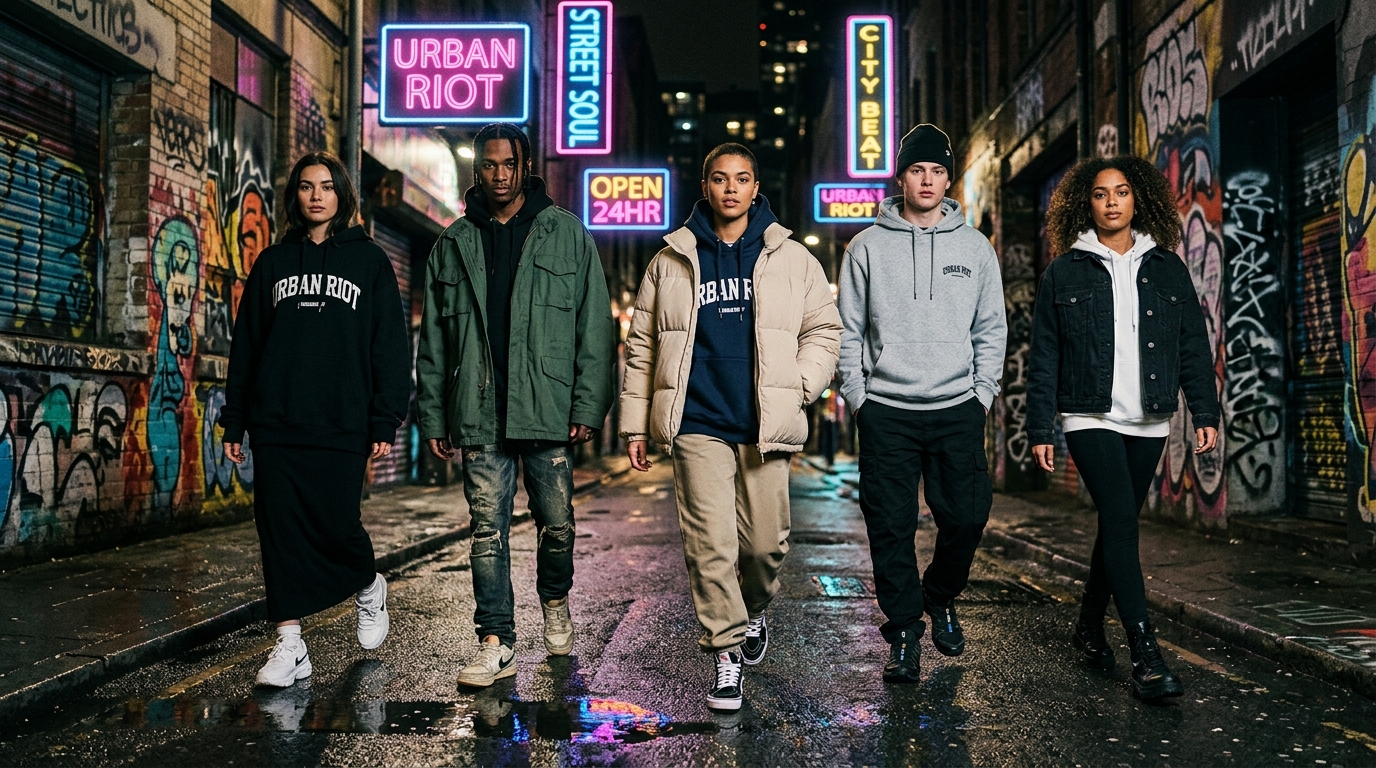
Core Rule of Proportions
Streetwear is not simply purchasing oversized clothes. It is an architectural discipline governed by the relationship between the shoulder drop, torso drape, hemline tiers, and lower-body break. When proportion is intentional, oversized looks authoritative, sculptural, and effortless.
The Foundation: Boxy Width vs. Vertical Length
The single most widespread misconception in casual streetwear is confusing vertical length with structural volume. Standard mass-market garments scale length and width simultaneously across sizing charts. When you purchase an oversized commercial basic tee, the hemline extends past your mid-thigh, distorting your natural torso-to-leg ratio and visually compressing your stature.
True modern streetwear silhouettes utilize a boxy, cropped-length pattern cut. This pattern broadens the chest circumference and drops the shoulder seam 4 to 7 centimetres off the acromion bone while terminating the waist hem right at the upper fly or beltline. This engineered geometry creates an expansive, relaxed upper-body drape without swallowing your leg length, allowing your natural height to remain intact while expressing bold volume.
When you stand naturally, a boxy drop-shoulder tee hangs away from the chest and lower back. This creates a rectangular column of negative space around the torso, promoting natural ventilation in warm Australian climates while presenting a formidable, clean profile from front, side, and rear angles.
The "Rule of Thirds" in Urban Layering
Visual harmony in high-end streetwear follows the classical design principle of thirds: a 1/3 upper-body to 2/3 lower-body visual division, or a stepped 1/3-1/3-1/3 tiering system across multi-layer fits. When constructing a layered outfit, each garment in your stack must serve a deliberate visual purpose without crowding adjacent layers:
- Base Tier (Foundation): An elongated split-hem or raw-edge combed cotton base tee extending 3–5 cm beneath your sweatshirt or hoodie waistband. This peeking hem establishes the lower boundary of your upper block.
- Mid Tier (Structure): A 500 GSM loopback fleece hoodie or crewneck sweatshirt with relaxed-tension ribbing resting naturally at the beltline. It should provide bulk and thermal comfort without ballooning around the waist.
- Outer Tier (Armor): A boxy utility vest, denim chore jacket, or cropped technical wind shell terminating flush with or slightly above the mid-layer, creating clear stepped depth.
✓ Shoulder Seam Alignment: The seam must drop smoothly midway down your upper bicep without creating pinched puckering or sleeve collapse.
✓ Sleeve Length Ratio: Short sleeves should fall just past the elbow; long sleeves should stack cleanly at the wrists with ribbed grip.
✓ Collar Tension Anchor: Necklines must sit snug and flush against the clavicle, anchoring the generous body drape beneath.
✓ Taper Equilibrium: Pair boxy wide tops with wide-leg or straight-leg trousers to maintain visual weight parity from head to toe.
Balancing Upper Volume with Lower Silhouette
During the early 2010s, streetwear relied heavily on skinny jeans beneath oversized tops. By 2026, street fashion has matured into a grounded, relaxed silhouette. When wearing an ultra-dense, boxy 300 GSM top, pairing it with skinny denim produces an awkward "inverted triangle" or "lollipop effect" that contradicts the relaxed confidence of the garment.
Instead, match heavy drop-shoulder cuts with relaxed wide-leg denim, double-knee carpenter trousers, or straight-cut utility cargos. A wide leg creates an unbroken vertical column of fabric that flows seamlessly into chunky skate sneakers, retro court silhouettes, or heavy-tread combat boots. This symmetry ensures that your silhouette looks grounded, masculine or sculpted, and cohesive from every vantage point.
The Role of Fabric Rigidity in Proportions
Proportion cannot exist without fabric integrity. Flimsy 150 GSM jersey clings to the body under gravity, causing oversized garments to sag rather than drape. To maintain the crisp architectural silhouette required in modern streetwear, the textile must possess internal density.
By using 280 to 340 GSM heavy jersey for t-shirts and 480 to 520 GSM loopback cotton fleece for outerwear, the fabric holds its own weight. The sleeve openings stay open, the chest panel remains flat and uncreased, and the drop shoulder maintains its distinct slope without requiring synthetic interfacing.
Australian Climate Adaptation: Layering with Breathability
In Australian metropolitan hubs such as Melbourne, Sydney, and Brisbane, weather fluctuations demand smart, modular layering. The golden rule is building your stack exclusively from 100% natural, breathable fibers like organic combed cotton and unbrushed French terry.
Synthetic thermal linings trap humid perspiration during sudden afternoon temperature spikes. In contrast, heavy natural cotton allows continuous air circulation. When the sun breaks through and you peel off your jacket, your base layer remains an intentional, structured boxy tee that commands respect as a standalone centerpiece.