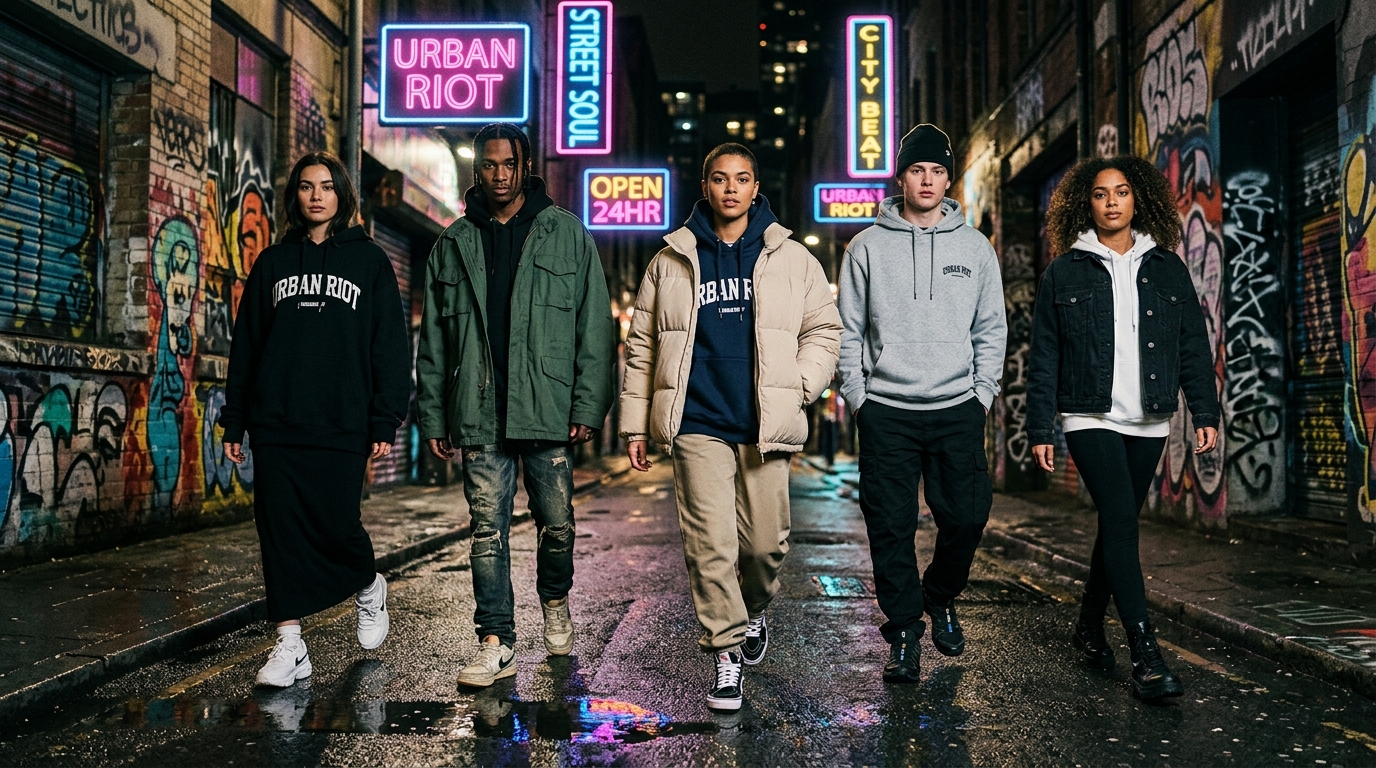
Core Rule of Proportions
Streetwear is not simply purchasing oversized clothes. It is an architectural discipline governed by the relationship between the shoulder drop, torso drape, hemline tiers, and lower-body break. When proportion is calculated with mathematical precision, oversized garments look authoritative, sculptural, and effortlessly commanding rather than sloppy or unkempt.
The Geometry of Contemporary Streetwear
Fashion design, at its highest level, is applied geometry. While traditional bespoke tailoring emphasizes strict adherence to anatomical contours — fitting darts to the waist, curving sleeve caps to the natural shoulder joint, and tapering trousers closely along the calf — streetwear establishes an entirely separate proportional vocabulary. Modern streetwear uses clothing to construct an exterior architectural envelope that reimagines the wearer's physical presence in space.
The goal of streetwear proportion is not to hide the body or simply make it appear larger; it is to create a compelling visual balance between structural volume and negative space. When you view a well-dressed individual on the streets of Melbourne, Tokyo, or London, what catches your eye is not brand logos or expensive accessories — it is the crisp, confident relationship between the broad horizontal plane of their shoulders, the clean vertical drop of their torso, the stepped tiers of their layered hems, and the grounded weight of their trousers pooling over heavy footwear.
The Foundation: Boxy Width vs. Vertical Length
The single most widespread misconception in casual streetwear is confusing vertical length with structural volume. Standard mass-market apparel brands scale their sizing charts along a linear axis: as a t-shirt increases from Size M to Size XXL, it increases equally in chest width and body length. When an unsuspecting consumer buys an oversized commercial basic, the hemline extends past their mid-thigh or covers their knees, distorting their natural torso-to-leg ratio and visually compressing their stature by several inches.
True modern luxury streetwear utilizes a boxy, cropped-length pattern cut. This pattern broadens the chest and back circumference by 10 to 18 centimeters and drops the shoulder seam 5 to 8 centimeters off the acromion bone, while deliberately terminating the waist hem right at the upper fly or beltline (typically 66 to 72 cm for adult sizing). This engineered geometry creates an expansive, relaxed upper-body drape without swallowing your leg length, allowing your natural height and leg line to remain fully intact while projecting bold horizontal volume.
When you stand naturally in an engineered boxy drop-shoulder tee, the heavy fabric hangs away from the chest and lower back. This creates a rectangular column of negative space around the torso. In warm Australian climates, this column promotes continuous natural airflow and temperature regulation, while visually presenting a crisp, sculptural profile from front, side, and rear angles.
The Anatomy of the Engineered Drop Shoulder
A true drop-shoulder cut is not simply a standard sleeve attached to an excessively wide body panel. In traditional tailoring, the shoulder seam terminates exactly at the acromion — the bony point at the top edge of the shoulder blade. In an engineered streetwear cut, this seam is shifted deliberately down the upper arm by 5 to 10 centimeters.
To prevent this dropped seam from creating unsightly fabric bunching or pulling under the armpits, the pattern maker must simultaneously adjust three critical variables:
- Armhole Depth (Scye Depth): The armhole is lowered and widened into an elliptical curve, allowing complete freedom of arm movement without pulling up the garment's bottom hem.
- Sleeve Pitch & Angle: The sleeve is set at a flatter, more horizontal angle relative to the body panel, mirroring the natural resting position of the arms rather than an upright military stance.
- Sleeve Cap Height: The rounded cap at the top of the sleeve is flattened, eliminating the puckering and shoulder pads associated with formal wear and ensuring a smooth, fluid cascade of fabric down the bicep.
The "Rule of Thirds" in Urban Layering
Visual harmony in high-end streetwear follows the classical design principle of thirds: a 1/3 upper-body to 2/3 lower-body visual division, or a stepped 1/3-1/3-1/3 tiering system across multi-layer fits. When constructing a layered outfit, each garment in your stack must serve a deliberate visual purpose without crowding adjacent layers:
- Base Tier (Foundation): An elongated split-hem or raw-edge combed cotton base tee extending 3 to 5 cm beneath your sweatshirt or hoodie waistband. This peeking hem establishes the lower boundary of your upper block and introduces a horizontal line of contrasting color or texture (e.g., crisp white cotton peeking beneath washed black loopback fleece).
- Mid Tier (Structure): A 500 GSM loopback fleece hoodie or crewneck sweatshirt with relaxed-tension ribbing resting naturally at the beltline. It should provide bulk and thermal comfort without ballooning around the waist, acting as the visual core of your upper body.
- Outer Tier (Armor): A boxy utility vest, denim chore jacket, heavy overshirt, or cropped technical wind shell terminating flush with or slightly above the mid-layer, creating clear stepped depth and visual intrigue.
✓ Shoulder Seam Alignment: The seam must drop smoothly midway down your upper bicep without creating pinched puckering or sleeve collapse.
✓ Sleeve Length Ratio: Short sleeves should fall right at or just past the elbow; long sleeves should stack cleanly at the wrists with firm ribbed grip.
✓ Collar Tension Anchor: Necklines must sit snug and flush against the clavicle, anchoring the generous body drape beneath with zero gaping.
✓ Taper Equilibrium: Pair boxy wide tops with wide-leg or straight-leg trousers to maintain visual weight parity from head to toe.
Balancing Upper Volume with Lower Silhouette
During the early 2010s, streetwear relied heavily on skinny jeans beneath oversized tops. By 2026, street fashion has matured into a grounded, relaxed silhouette. When wearing an ultra-dense, boxy 300 GSM top, pairing it with skinny denim produces an awkward "inverted triangle" or "lollipop effect" that contradicts the relaxed confidence of the garment.
Instead, match heavy drop-shoulder cuts with relaxed wide-leg denim, double-knee carpenter trousers, or straight-cut utility cargos. A wide leg creates an unbroken vertical column of fabric that flows seamlessly into chunky skate sneakers, retro court silhouettes, or heavy-tread combat boots. This symmetry ensures that your silhouette looks grounded, sculpted, and cohesive from every vantage point.
If you prefer an athletic taper, opt for utility cargos with adjustable hem bungees or carrot-cut trousers that maintain generous thigh volume before tapering sharply at the ankle bone. This preserves the visual weight through the thighs while showcasing your sneakers with precision.
The Role of Fabric Rigidity in Proportions
Proportion cannot exist without fabric integrity. Flimsy 150 GSM jersey clings to the body under gravity, causing oversized garments to sag rather than drape. To maintain the crisp architectural silhouette required in modern streetwear, the textile must possess internal density.
By using 280 to 340 GSM heavy jersey for t-shirts and 480 to 520 GSM loopback cotton fleece for outerwear, the fabric holds its own weight. The sleeve openings stay open, the chest panel remains flat and uncreased, and the drop shoulder maintains its distinct slope without requiring synthetic interfacing.
Heavyweight cotton also behaves differently during movement: instead of fluttering and clinging with every gust of wind, a 300 GSM tee sways with steady, rhythmic momentum. This gives the wearer an aura of composure and grounded physical presence that lightweight garments simply cannot replicate.
Proportions Across Diverse Body Types
A common critique of oversized streetwear is that it only flatters tall, lean models. In reality, engineered boxy cuts can be calibrated to flatter any body type when adjusted with intention:
- For Shorter / Compact Frames: Prioritize cropped body lengths (64 to 68 cm) and high-waisted trousers. This elevates the visual waistline, dedicating 65% or more of your total height to your legs. Avoid drop-tail hemlines that extend past the buttocks, as they visually shorten the lower body.
- For Taller Frames: Embrace full puddle breaks over wide-leg trousers and extended sleeve stacks. Taller individuals can easily support multi-tiered layering (tee, hoodie, overshirt, trench) without visual clutter.
- For Broader / Athletic Builds: The natural drop shoulder complements broad clavicles and chest development. Ensure the neckline ribbing is wide and snug against the neck, and choose straight-fall waistbands that drape cleanly over the hips rather than clinging to the lats.
- For Slender Builds: The negative space inside a 300 GSM boxy tee adds substantial visual presence across the shoulders and chest without requiring tight, clingy garments. Pair with straight-leg carpenter pants to build a solid, structured frame.
Australian Climate Adaptation: Layering with Breathability
In Australian metropolitan hubs such as Melbourne, Sydney, and Brisbane, weather fluctuations demand smart, modular layering. The golden rule is building your stack exclusively from 100% natural, breathable fibers like organic combed cotton and unbrushed French terry.
Synthetic thermal linings trap humid perspiration during sudden afternoon temperature spikes. In contrast, heavy natural cotton allows continuous air circulation. When the sun breaks through and you peel off your jacket, your base layer remains an intentional, structured boxy tee that commands respect as a standalone centerpiece.
The Golden Ratio (1:1.618) Applied to Streetwear Silhouettes
The Golden Ratio (Phi = 1.618) has governed classical Greek architecture, Renaissance painting, and automotive design for millennia. In contemporary high-end streetwear, the Golden Ratio provides an objective mathematical formula for eliminating aesthetic awkwardness in multi-layered outfits.
When calculating the vertical division of your outfit, divide your total height from collarbone to floor into Golden Ratio segments. For an individual standing 180 cm tall, a 1:1.618 proportion dedicates approximately 68 cm to the upper torso block (from neck collar to the bottom of the cropped jacket or hoodie hem) and 112 cm to the lower body block (from the waistband to the footwear outsole). When your upper-body garments terminate precisely at this 68 cm boundary, your body naturally appears taller, your legs significantly longer, and your shoulders broader.
When you violate this ratio — for example, wearing a 82 cm longline fast-fashion t-shirt that extends down to your mid-thigh — the upper block expands to 45% of your total stature, compressing your leg line to an unflattering 55% division. This single mathematical error is why many people feel "stumpy" or short in oversized clothing. By adopting engineered cropped boxy cuts that respect the Golden Ratio, oversized volume works in your favor rather than against your height.
The Five Core Streetwear Silhouette Archetypes
To give you a definitive styling roadmap, here are the five master silhouette archetypes used by runway stylists, lookbook photographers, and creative directors globally:
- Archetype A: The Boxy Column (Boxy Upper + Wide-Leg Lower): The quintessential 2026 streetwear silhouette. An engineered 300 GSM boxy tee or 500 GSM cropped hoodie paired with wide-leg 14 oz raw denim or pleated utility twill. Both upper and lower blocks project horizontal breadth, while a clean waist boundary and structured sneakers create an unbroken vertical column of architectural presence.
- Archetype B: The Dynamic Inverted Triangle (Expansive Upper + Tapered Lower): An ultra-wide drop-shoulder hoodie paired with carrot-cut utility cargos or bungee-cinched pants that taper sharply at the ankle bone. This proportion emphasizes upper-body shoulder span and chest development while keeping the ankles and footwear sharp and athletic. Ground with high-top basketball sneakers.
- Archetype C: The Stepped Cascade (Multi-Tier Layered Stack): A 3-tier upper stack featuring an elongated base tee (peeking 4 cm), a cropped mid-layer crewneck, and an open boxy overshirt, paired with straight-leg carpenter pants with a zero-break hem over retro court shoes. The stepped horizontal hemlines create complex visual depth and textural storytelling.
- Archetype D: The Elongated A-Line (Fitted/Clean Upper + Expansive Flowing Lower): A minimalist, form-fitting 300 GSM mock-neck or clean blank tee tucked tightly into ultra-wide-leg puddle-break trousers or a utilitarian maxi cargo skirt. The minimal upper block draws attention to the jawline and clavicle, while the flowing lower block delivers dramatic runway movement.
- Archetype E: The High-Low Monolith (Oversized Streetwear + Formal Tailoring): A 500 GSM blank loopback hoodie worn beneath a tailored, floor-skimming double-breasted wool overcoat with relaxed suit trousers and chunky platform derbies. The collision of casual athletic fleece with rigid British or Italian tailoring creates high visual tension that commands immediate respect.
Negative Space Engineering: The Armor Effect
In sculpture and architecture, "negative space" refers to the empty volume surrounding an object. In streetwear, negative space is the air gap engineered between your skin and the interior face of the garment. When you wear a 150 GSM commercial tee, there is zero negative space — the fabric clings directly to your skin, exposing every anatomical contour and moving erratically with body moisture.
In contrast, a 300 to 340 GSM combed cotton tee possesses enough internal rigidity to hold its own three-dimensional perimeter. It creates a 3 to 5 cm envelope of negative space around your torso. This negative space acts as visual armor: it smooths over physical asymmetries, eliminates self-consciousness about body contours, and projects an aura of confident, unflappable composure. You are not simply wearing a shirt; you are occupying a beautifully drafted architectural space.
Visual Grounding: Matching Footwear Mass to Silhouette Volume
The final and most critical rule of streetwear silhouette engineering is visual grounding. Volume on top demands weight on the bottom. If you wear an oversized 500 GSM hoodie with a 15 cm drop shoulder, your footwear must possess sufficient physical and visual mass (thick soles, bold outsoles, rich suede/leather textures) to anchor the silhouette to the earth.
When you pair an oversized top with ultra-slim, low-profile running shoes, the eye perceives the silhouette as precarious and top-heavy, creating visual anxiety. By anchoring your wide-leg trousers and boxy tops with chunky retro runners, lug-sole loafers, or platform skate shoes, you achieve aesthetic equilibrium — a grounded, statuesque stance that feels complete from every angle.
Final Takeaway
Mastering streetwear proportions is about controlling geometry, not collecting sizes. Seek out engineered boxy cuts with cropped lengths, demand high-density 300+ GSM natural textiles, balance upper volume with relaxed lower-body cuts, and respect the Rule of Thirds. When your proportions are dialled in, your outfits will consistently project effortless luxury and subcultural authenticity.